Have you ever walked into a home and immediately felt like something was off? It is usually the flooring. It is the physical foundation of your daily life, the thing your feet touch first thing in the morning, and the backdrop for every piece of furniture you own.
Choosing new flooring is one of the most significant design and financial decisions you will make as a homeowner. It shapes your home's style, daily maintenance routine, and long-term resale value.
Right now, we are in the middle of a major shift in home design. The cold, clinical grays that dominated the past decade are officially out. Homeowners are moving toward warm, sun-washed midtones, soft blonde oaks, and rich, earthy colors like terracotta and mocha mousse.¹
But how do you balance these beautiful design trends with the messy realities of daily life? You cannot just put delicate materials everywhere and hope for the best. You need a strategic approach that balances gorgeous aesthetics with real-world functionality.
The High-Traffic Zones in Kitchens and Entryways
Think of your entryway and mudroom as your home's front line of defense. This is where mud, rain, snow, and grit make their first entry. If you choose the wrong material here, your floor will look beaten up within a year.
Kitchens are not much easier. They are high-activity zones prone to dropped heavy pots, oil splatters, and water spills. For these areas, you must prioritize moisture resistance and scratch protection.
Let's compare the heavy hitters for these spaces
• Porcelain or Ceramic Tile: This is the ultimate champion for wet and dirty areas. Porcelain tile is incredibly dense and virtually impervious to water. It is highly scratch-resistant, though it can crack if you drop a heavy cast-iron skillet on it.
• Luxury Vinyl Plank (LVP): LVP is 100 percent waterproof and highly resistant to scratches and pet claws. Because it is softer and warmer underfoot than tile, it is much more comfortable to stand on while prepping dinner.
The global LVP market is absolutely booming, projected to reach over 18 billion dollars by 2035. Meanwhile, solid hardwood is losing ground because of moisture concerns and high costs.
To help you plan, here is how the top high-traffic materials compare in terms of cost and performance
• Porcelain and Ceramic Tile: Costs $8 to $20+ installed per square foot. It lasts over 50 years and has excellent water resistance.
• Luxury Vinyl Plank (LVP): Costs $5 to $12 installed per square foot. It lasts 10 to 25 years and has excellent water resistance.
• Laminate: Costs $6 to $11 installed per square foot. It lasts 10 to 25 years and has moderate water resistance.
For entryways, a classic black-and-white checkerboard tile pattern is making a major comeback. For kitchens, warm-toned wood-look LVP laid in a herringbone pattern offers a perfect blend of style and durability.
Creating Sanctuary in Bedrooms and Living Spaces
Your living room and bedrooms are personal sanctuaries. These are the spaces where you want to kick off your shoes, relax, and feel completely comfortable. Here, your flooring priorities shift toward warmth, comfort, and acoustics.
Nobody wants a living room that echoes like a gymnasium. Real wood and carpet absorb sound, creating a cozy and inviting atmosphere.
Let's look at your best options
• Engineered Hardwood: This is highly recommended by experts. It features a real wood top layer over a stable plywood core, making it less likely to gap or warp when humidity changes. It costs $7 to $15 per square foot installed and lasts up to 40 years.
• Solid Hardwood: This remains the gold standard for high-end homes and long-term resale value. It can last over a century because you can refinish it multiple times. It costs $8 to $18 per square foot installed.
• High-Quality Carpet: This provides a soft landing in the morning and excellent sound insulation. It costs $4 to $10 per square foot installed but has a shorter lifespan of 5 to 15 years.
What is trending right now? Wide-plank European white oak with a matte finish is incredibly popular for living rooms.
If you suffer from allergies, experts recommend choosing engineered hardwood paired with a washable organic area rug instead of wall-to-wall carpet. For bedrooms, textured loop carpets like Berber in soft taupe or terracotta add beautiful depth and warmth.³
The Basement Challenge
Basements require a completely different approach. Because they are below-grade, they are highly susceptible to moisture vapor rising through the concrete slab.
Solid hardwood will warp and rot in this environment. Instead, go with LVP. It is entirely inorganic and waterproof, meaning it won't harbor mold or mildew if a minor leak occurs. Use light-colored, wide-plank LVP to bounce light around and make low ceilings feel bright and airy.
Bathrooms and Laundry with Smart Moisture Control
Bathrooms and laundry rooms face constant exposure to standing water, high humidity, and harsh cleaning chemicals. Safety and water permeability are your primary concerns here. Water seeping into your subfloor is a recipe for mold, rot, and expensive repairs.
Porcelain or ceramic tile is the only material that can be completely sealed with grout and caulk to protect your subfloor.
But how do you keep these wet zones safe? Slip resistance matters.
• Choose matte finishes: High-gloss tiles become incredibly slippery when wet. Textured, matte-finish tiles that mimic natural travertine or marble are much safer and look beautiful.
• Go big with tile size: Large-format tiles (over 12 inches by 12 inches) are dominating modern bathrooms because they minimize grout lines, which makes the space feel larger and easier to clean.
Avoid encaustic cement tiles. They look stunning on social media, but they are highly porous, stain easily, and require intense maintenance and sealing. Stick to porcelain for a stress-free life.
A Cohesive Vision and Tips for Seamless Transitions
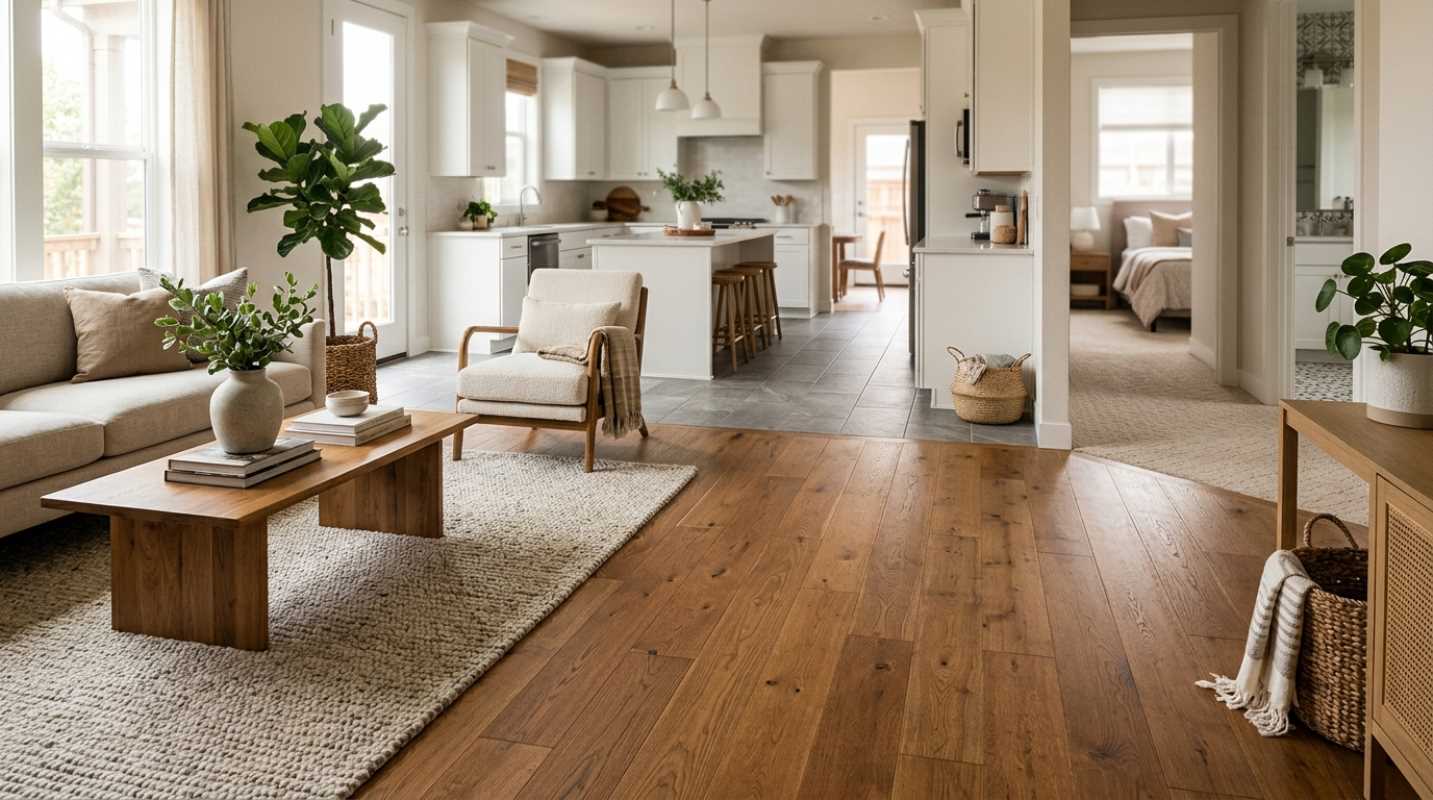
How do you bring all of these choices together without making your home look like a mismatched patchwork quilt? This is especially important if you have an open floor plan where the kitchen flows directly into the living room.
You need a plan to create visual flow throughout your home
• Match your undertones: If you are transitioning from LVP in your kitchen to engineered hardwood in your living room, make sure the wood tones share the same warm or cool undertones.
• Use quality transition strips: Transition strips help bridge the gap between different flooring heights and materials, making the change feel clean and intentional.
• Limit your palette: Try to use no more than three different flooring materials throughout your entire home to keep the design cohesive.
As you plan your budget, keep in mind that labor and freight costs represent a massive portion of your overall project expenses.²
Do not try to save money by skipping subfloor preparation. If your subfloor is not perfectly flat, your new click-lock LVP or laminate joints will eventually crack and separate under foot traffic.
Take your time, order samples, and test them in your home's natural light. With a strategic approach, you will end up with floors that look incredible and stand up to your daily life for decades to come.
Sources:
1. Garrison Collection - Top Flooring Trends for 2026
https://www.garrisoncollection.com/blog/top-flooring-trends-for-2026-colors-patterns-and-finishes
2. Floors by Steller - What Will Drive Flooring Project Costs in 2026 and Beyond
https://www.floorsbysteller.com/blogs/steller-blog/what-will-drive-flooring-project-costs-in-2026-and-beyond
3. Forbes - 2026 Home Flooring Trends: Patterned Hardwoods and Toasty Palettes
https://www.forbes.com/sites/terriwilliams/2026/02/25/2026-home-flooring-trends--patterned-hardwoods-and-toasty-palettes/

.png)